Web performance · Core Web Vitals · WordPress · Image optimisation
Laptop Finder World: Speed on a 200-Article Affiliate Build
A 200+ article laptop affiliate site on shared hosting moved mobile PageSpeed from 61 to 72, Pingdom load from 2.77s to 1.53s and requests from 75 to 46, while GTmetrix performance reached 100%.
Results at a glance
- Mobile PageSpeed
- 61 → 72
- Pingdom load
- 2.77s → 1.53s
- Requests
- 75 → 46
- GTmetrix
- 96% → 100%
The problem
Laptop Finder World was a 200+ article affiliate site built on WordPress with Kadence and Elementor blocks, running on budget shared hosting. The content was working: pages ranked and the site carried enough articles to need real internal navigation.
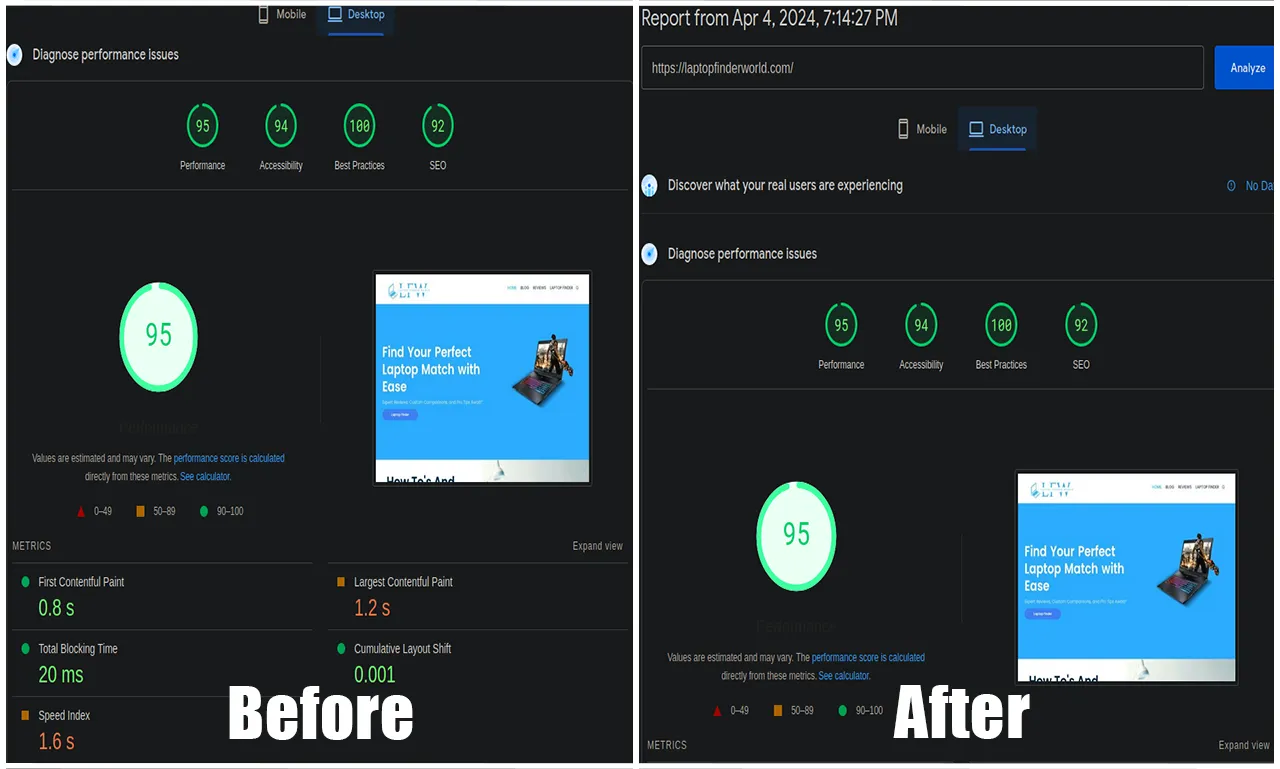
The build was the problem. Desktop PageSpeed sat at 95, which looked fine on a laptop and hid the actual experience: mobile scored 61, with 510ms of total blocking time, a 2.1MB page and 75 requests on the homepage. GTmetrix structure scored 97% but LCP was 1.2s on a fast connection and much worse on mobile.
An affiliate site lives or dies on mobile traffic, so a desktop-only win was not a win.
Why we decided to solve it
Affiliate revenue depends on the reader staying long enough to click through to a retailer. Every extra second of load time and every blocked interaction is a reader leaving before the comparison table.
The site was also growing. Fixing the template once was cheaper than paying the cost on every new article, and a faster page meant the internal-link structure built across 200 articles could actually do its job.
How we did it
Start from the requests, not the score
The audit worked from what the homepage actually loaded: 75 requests, 2.1MB, Elementor assets on pages that did not use Elementor sections, and scripts queued site-wide for features used on a handful of pages.
Cut the payload
Images were the largest single cost. Delivery was moved to properly sized, compressed formats, with the homepage’s above-the-fold imagery prioritised and the rest lazy-loaded. Page size fell from 2.1MB to 1.9MB and requests from 75 to 46, which is where most of the load-time gain came from.
Remove what the template loaded by default
Plugin and builder assets were trimmed so pages only loaded what they rendered, render-blocking CSS and JS were deferred where it was safe, and fonts were reduced to the weights actually used.
Re-measure on the same hosting
The point was to keep the site on the hosting it was already paying for. Each change was checked with PageSpeed Insights on both profiles, GTmetrix for the waterfall and LCP, and Pingdom for an independent load-time read.
The result
Mobile PageSpeed moved from 61 to 72. Pingdom load time fell from 2.77s to 1.53s, with requests down from 75 to 46 and page size from 2.1MB to 1.9MB. GTmetrix performance reached 100%, with LCP down from 1.2s to 486ms.
Desktop stayed at 95. That is the honest reading of the work: the desktop score had nowhere to go, and the gain that mattered was mobile interactivity and payload on a shared-hosting budget.
The site has since been retired, so the numbers above are the April 2024 captures rather than a live score.
Evidence
What the work looked like.
Captures from the engagement. Images marked as redacted have sensitive business data blurred before publication.
Contact
Want to talk through a project like this?
I am open to remote SEO, web design and performance roles. If you need more detail on a specific project, ask — I will share what the client allows.
- [email protected]
- Phone
- +92 322 6189669
- Location
- Multan, Pakistan · Remote
- Status
- Open to remote roles